


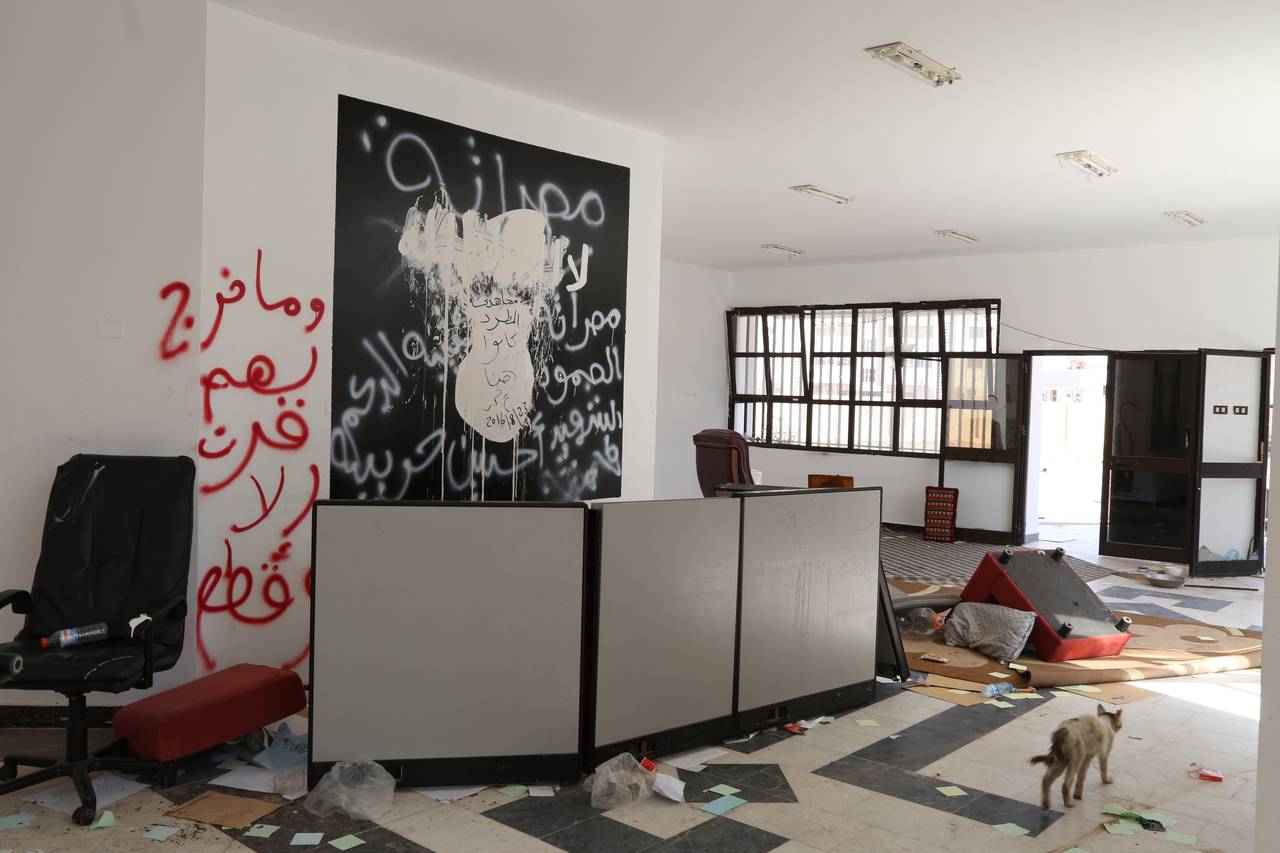
The papers offer rare insights into how the group governed and sought to win over the population and erect a satellite state in Libya. Detailed lists of prisoners with their offenses and corresponding punishments show how the militants enforced their austere vision of Islamic rule. Tax documents show how they tried to curry favor with some residents by confiscating money and jewelry from the wealthy to distribute to the needy, while also filling their own coffers. The paper trail also reveals the pedestrian bureaucracy behind the group’s brutal rule in Sirte, the largest city Islamic State has ever held outside Iraq and Syria. (…) In Libya, Islamic State was able to establish and run a state with tax-collection offices, police, courts and even an immigration office to support foreign recruits, a highly organized venture otherwise seen only in Iraq and Syria, where its leaders are based, U.S. officials say.“
(Maria Abi-Habib: „In Coastal Libya, Islamic State Prepared to Build a Nation“)


